

Hardly any additive is discussed as controversially as magnesium stearate. In this article we explain what magnesium stearate actually is, where it comes from, whether it is a health concern – and why we at Vegavero are gradually doing without it.
The Key Points at a Glance
-
Magnesium stearate (E470b) is a widely used anti-caking agent that makes the production of capsules and tablets easier – it is not a magnesium supplement.
-
It is obtained through the saponification of fats; common sources are palm oil and cottonseed oil, alongside soy and rapeseed. Both vegan and animal-based variants are possible.
-
In the small amounts that are common in supplements, magnesium stearate is considered harmless – it does, however, offer no nutritional benefit.
-
At Vegavero, we are replacing it step by step with natural alternatives – out of conviction, not because the substance is considered harmful in these amounts.
What Is Magnesium Stearate?
Magnesium stearate is a chemical compound of magnesium and stearic acid – a so-called stearate. Magnesium stearate is a type of magnesium salt of stearic acid that, at room temperature, is a white, odourless and water-insoluble powder. Stearic acid is a saturated fatty acid that occurs in many foods, including animal and plant fats and oils. Cocoa and flaxseed, for example, are foods that contain significant amounts of stearic acid.
It is important to note that this substance should not be regarded as a magnesium supplement, since it contains only a very small percentage of the mineral. On the label, its presence may be indicated as "magnesium stearate," "magnesium salts of fatty acids" (also magnesium salts of edible fatty acids) or under the acronym E470b – these designations all refer to the same substance.
Don't confuse the two: You can learn more about the mineral magnesium itself on our magnesium ingredient page. Magnesium stearate is clearly distinct from it.
What Is Magnesium Stearate Used For?
It is frequently used in the cosmetics, pharmaceutical and food industries as a flow agent, emulsifier and lubricant. It speeds up the production process by preventing ingredients from sticking to the mechanical equipment, and it makes powder processing easier and better. In addition to speeding up production, magnesium stearate gives capsules and tablets more consistency, making them easier to swallow and helping them move better through the gastrointestinal tract.
Technically, magnesium stearate belongs to the anti-caking agents, also called flow aids: it improves the flowability of powders by coating the surface of the individual particles – similar to dusting with powder. This allows powder to be dosed evenly during processing. It is found not only in supplements and medicines, but also in foods such as baked goods, sweets and chewing gum – and as a flow aid, magnesium stearate is likewise common in the cosmetics industry.
Additives fulfil a wide range of different tasks: some serve as fillers or carrier substances, others as colourants, humectants or foaming agents. Magnesium stearate, by contrast, is a pure anti-caking agent and – unlike a filler – has no nutritional benefit for humans.
Magnesium Stearate: Origin & Sustainability – Vegan, Animal-Based or from Palm Oil?
A question many customers ask: Is magnesium stearate vegan? The answer depends on the origin. Magnesium stearate is produced through the saponification of fats – the stearic acid it contains can come from plant or animal sources. Common sources are palm oil and cottonseed oil, alongside soy, rapeseed or corn germ oil. There are therefore vegan and animal-based variants; in supplements, vegan magnesium stearate is predominantly used today. Anyone who values a purely vegan production should ask the manufacturer specifically.
Another concern is the possible contamination of magnesium stearate, which is often obtained from cottonseed oil and may contain pesticides or come from genetically modified organisms. Nevertheless, this substance is heavily purified through an intensive refining process before being used as an ingredient in foods, cosmetics and supplements. Moreover, the final molecular form of magnesium stearate is identical, regardless of whether it comes from a genetically modified cotton plant or a non-genetically modified plant.
What Health Risks Does Magnesium Stearate Pose?
The FDA (Food and Drug Administration) in the United States has approved the use of magnesium stearate as an additive in foods and supplements. This excipient is also included in the list of food additives approved in Italy in accordance with the guidelines of Regulation (EC) No. 1333/2008.¹ In its database, Altroconsumo (a consumer organisation) classifies the use of this additive as "acceptable" in certain specific cases and states that, to the best of our knowledge, no effects on the body are associated with it (neither beneficial nor harmful).
According to the National Center for Biotechnology Information, it is generally recognised as a safe substance when consumed in amounts of less than 2,500 milligrams (mg) per kilogram per day. This means, for example, that an adult man weighing 85 kg could take up to 212,500 mg per day, which corresponds to roughly 283,750 mg of capsules per day. It therefore appears to have no side effects or harmful consequences when taken in small amounts, such as those used by capsule and medicine manufacturers.
Other sources cite a well-documented reference value of an intake of 2.5 g of magnesium stearate per day, classified by the FDA as harmless – a value that is nowhere near reached by the amounts customary in capsules (often less than one percent of the product).
Magnesium Stearate – True or False?
-
Current scientific evidence does not support the claim that magnesium stearate can suppress the functions of T-lymphocytes, which are highly specialised cells that fight intracellular pathogens such as viruses and some bacteria. This belief is based on a 1990 study conducted on a single mouse. When the mouse's T-cells were incubated with stearic acid (not magnesium stearate), the cell membrane collapsed and the T-cells lost all functions. However, this experiment cannot be replicated in humans, because mouse T-cells lack a specific enzyme (stearoyl-CoA 9-desaturase) that is present in humans and can convert stearic acid into oleic acid, thereby cancelling out the alleged toxicity of this substance.
-
Current scientific evidence also does not support the claim that magnesium stearate could impair the body's ability to absorb the contents of medicinal capsules. Studies carried out so far on this substance show that the absorption of active ingredients may be slowed down, but not impaired. A 2007 study, for example, showed a slower dissolution of tablets containing magnesium stearate – the absorption of the active ingredients was thereby delayed, not prevented.
Overall, the body of research on possible side effects is thin. Regarding allergies to magnesium stearate, only a single case report exists to date; a general allergy risk cannot be derived from it.
Why Do Manufacturers Use the Additive Magnesium Stearate – and Can It Be Done Without?
Why do so many manufacturers reach for magnesium stearate in the first place? Above all, because it makes production more efficient: it speeds up production, prevents sticking and ensures even processing. For the industry, this is a noticeable improvement in the workflow – an advantage for production, not for the consumer.
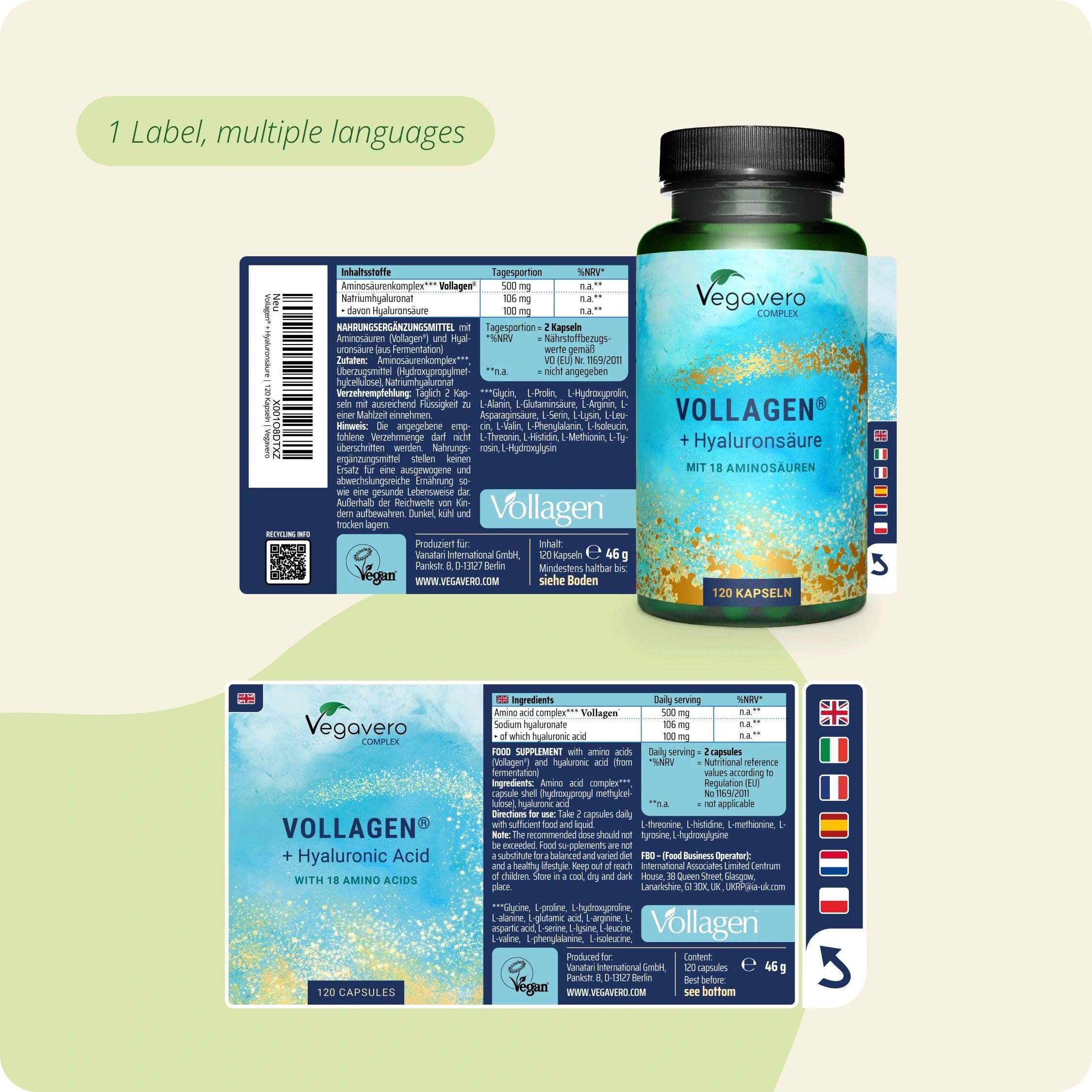
Despite the safety of this additive in small amounts, one should be aware that magnesium stearate is not a natural substance. Our philosophy – alongside guaranteeing high-quality products – is to manufacture supplements as naturally as possible and to avoid the use of artificial additives. That is why we are gradually eliminating magnesium stearate from our products and replacing it with other natural additives that together mimic the function of the excipient. These natural additives are of course only added when they are needed.
The Natural Alternatives to Magnesium Stearate That We Use
Rice bran extract (RBE) and sunflower oil.
They are used as stabilisers in some supplements when it is necessary to increase the binding capacity of the ingredients. It is also possible to obtain an organic version of these natural additives, which can therefore also be used in our organic supplements.
Before using rice bran extract, we used microcrystalline cellulose (E 460i), a cellulose of plant origin with stabilising and gel-forming properties. However, a high consumption of this additive, which is not absorbed in the intestine, can increase the frequency and volume of bowel movements; it can also increase the number of intestinal losses and cause meteorism or diarrhoea. For this reason it is banned in Australia. In addition, the European Food Safety Authority (EFSA) has not approved any health claims regarding the efficacy of this substance.
Gum arabic or acacia gum (E414).
It is also used as a binder. According to the regulations of the Ministry of Health, there are no restrictions on the maximum usable amount.
Hydroxypropyl methylcellulose (E 464).
As a coating agent – that is, as the packaging material for our capsules – we use hydroxypropyl methylcellulose (E 464), which, due to its stabilising and thickening properties, is frequently used as a food additive. This excipient is a cellulose derivative and is obtained directly from natural plant fibres.
How Do I Recognise Whether a Supplement Is of Good Quality?
When it is as natural as possible and therefore contains no artificial or unnecessary additives. We recommend always reading the labels carefully. In fact, companies are still obliged to declare all the ingredients contained; excipients cannot be excluded from the list. If the labels are not clearly visible and legible, especially online, or if the ingredient list is missing, this should be regarded as questionable.
Also pay attention to whether manufacturers use high-quality raw materials that are certified by independent third-party laboratories and regularly tested to verify that contamination levels comply with the standards – and whether the product meets industry standards for guaranteed quality, including ISO 9001, ISO 17025 and Good Manufacturing Practices (GMP).
Conclusion on Magnesium Stearate
Magnesium stearate has a worse reputation than the data warrant: in the small amounts that are customary in capsules, it is considered harmless. However, it brings no nutritional benefit – it is a pure aid to production. Anyone who values products that are as pure as possible pays attention to the ingredient list and reaches for supplements without unnecessary additives. This is exactly the path we take at Vegavero, step by step.
Frequently Asked Questions About Magnesium Stearate
Is magnesium stearate harmful?
In the small amounts that are customary in supplements and medicines, magnesium stearate is considered harmless by authorities such as the FDA. According to current data, there is no proven health risk in these amounts.
Is magnesium stearate vegan?
That depends on the origin: the stearic acid can be obtained from plant sources (e.g. palm oil, soy or rapeseed) or from animal sources. In supplements it is mostly vegan today – when in doubt, ask the manufacturer.
Is magnesium stearate the same as magnesium?
No. Magnesium stearate is an anti-caking agent and contains only a very small proportion of magnesium. It is not a magnesium supplement and makes no relevant contribution to your magnesium intake.
Does magnesium stearate impair nutrient absorption?
There is no reliable evidence for this. Studies suggest that the dissolution of tablets can slow down – the absorption of the active ingredients is thereby delayed, not prevented.
How do I recognise products without magnesium stearate?
A glance at the ingredient list is enough: additives must be declared. Look for terms such as "magnesium stearate," "magnesium salts of edible fatty acids" or "E470b" – and for manufacturers that rely on natural alternatives.
Source
¹ Approval as a food additive: Regulation (EC) No. 1333/2008 on food additives.
This article is for informational purposes only and does not replace medical or nutritional advice.






Improve your digestion: learn how to combine foods
Can mushrooms cure you? They sure can. Here are it's therapeutic and curative properties.